<?xml version="1.0" encoding="iso-8859-1" ?>
<?xml-stylesheet type="text/xsl" href="xsl/mathml.xsl"?>
<?xml-stylesheet type="text/css" href="../navi/css/teor.css"?>
<?xml-stylesheet type="text/css" href="css/nkkfs3.css"?>
<html  
xmlns="http://www.w3.org/1999/xhtml"  
><head>
<title>XML</title> 
<meta http-equiv="Content-Type" content="text/html; charset=iso-8859-1" /> 
<meta name="generator" content="TeX4ht (http://www.cse.ohio-state.edu/~gurari/TeX4ht/mn.html)" /> 
<meta name="originator" content="TeX4ht (http://www.cse.ohio-state.edu/~gurari/TeX4ht/mn.html)" /> 
<!-- xhtml,mozilla --> 
<meta name="src" content="nkkfs3.tex" /> 
<meta name="date" content="2005-04-07 09:21:00" /> 
<link rel="stylesheet" type="text/css" href="../navi/css/teor.css" />
<link rel="stylesheet" type="text/css" href="css/nkkfs3.css" /> 
</head><body 
>
<h3 class="likesectionHead"><a 
 id="x1-1000"></a>Faasiavaruus</h3>
<!--l. 29--><p class="noindent">Normaalimuotoinen kertalukua <!--l. 29--><math 
 xmlns="http://www.w3.org/1998/Math/MathML" display="inline" ><mi 
>n</mi></math>&#x0020;
oleva differentiaaliyht&#x00E4;l&#x00F6;ryhm&#x00E4; &#8212; esimerkiksi kertalukua
<!--l. 30--><math 
 xmlns="http://www.w3.org/1998/Math/MathML" display="inline" ><mi 
>n</mi></math> olevaa
yht&#x00E4;l&#x00F6;&#x00E4; vastaava normaaliryhm&#x00E4; &#8212; on
</p>
<div class="math-display"><!--l. 31--><math 
 xmlns="http://www.w3.org/1998/Math/MathML" display="block" ><mrow 
>
<mfenced separators="" 
open="{"  close="" ><mrow><mtable  align="axis"  
equalrows="false" equalcolumns="false" class="array"><mtr><mtd 
class="array"  columnalign="left"><msubsup><mrow 
><mi 
>y</mi></mrow><mrow 
><mn>1</mn></mrow><mrow 
><mi 
>&#x2032;</mi></mrow></msubsup 
></mtd><mtd 
class="array"  columnalign="left"> <mo 
class="MathClass-rel">=</mo> <msub><mrow 
><mi 
>f</mi></mrow><mrow 
><mn>1</mn></mrow></msub 
><mrow><mo 
class="MathClass-open">(</mo><mrow><mi 
>t</mi><mo 
class="MathClass-punc">,</mo><msub><mrow 
><mi 
>y</mi></mrow><mrow 
><mn>1</mn></mrow></msub 
><mo 
class="MathClass-punc">,</mo><mo 
class="MathClass-op">&#x2026;</mo><mo 
class="MathClass-punc">,</mo><msub><mrow 
><mi 
>y</mi></mrow><mrow 
><mi 
>n</mi></mrow></msub 
></mrow><mo 
class="MathClass-close">)</mo></mrow><mo 
class="MathClass-punc">,</mo></mtd>
</mtr><mtr><mtd 
class="array"  columnalign="left">   </mtd><mtd 
class="array"  columnalign="left"><mo 
class="MathClass-op">&#x22EE;</mo>              </mtd>
</mtr><mtr><mtd 
class="array"  columnalign="left"><msubsup><mrow 
><mi 
>y</mi></mrow><mrow 
><mi 
>n</mi></mrow><mrow 
><mi 
>&#x2032;</mi></mrow></msubsup 
></mtd><mtd 
class="array"  columnalign="left"> <mo 
class="MathClass-rel">=</mo> <msub><mrow 
><mi 
>f</mi></mrow><mrow 
><mi 
>n</mi></mrow></msub 
><mrow><mo 
class="MathClass-open">(</mo><mrow><mi 
>t</mi><mo 
class="MathClass-punc">,</mo><msub><mrow 
><mi 
>y</mi></mrow><mrow 
><mn>1</mn></mrow></msub 
><mo 
class="MathClass-punc">,</mo><mo 
class="MathClass-op">&#x2026;</mo><mo 
class="MathClass-punc">,</mo><msub><mrow 
><mi 
>y</mi></mrow><mrow 
><mi 
>n</mi></mrow></msub 
></mrow><mo 
class="MathClass-close">)</mo></mrow><mo 
class="MathClass-punc">.</mo></mtd></mtr>
<!--ll--></mtable>                                                                                 </mrow></mfenced>
</mrow></math></div>
<!--l. 37--><p class="nopar">T&#x00E4;m&#x00E4;n ratkaisu muodostuu <!--l. 38--><math 
 xmlns="http://www.w3.org/1998/Math/MathML" display="inline" ><mi 
>n</mi></math>&#x0020;
funktiosta <!--l. 38--><math 
 xmlns="http://www.w3.org/1998/Math/MathML" display="inline" ><msub><mrow 
><mi 
>y</mi></mrow><mrow 
><mn>1</mn></mrow></msub 
><mrow><mo 
class="MathClass-open">(</mo><mrow><mi 
>t</mi></mrow><mo 
class="MathClass-close">)</mo></mrow><mo 
class="MathClass-punc">,</mo><mo 
class="MathClass-op">&#x2026;</mo><mo 
class="MathClass-punc">,</mo><msub><mrow 
><mi 
>y</mi></mrow><mrow 
><mi 
>n</mi></mrow></msub 
><mrow><mo 
class="MathClass-open">(</mo><mrow><mi 
>t</mi></mrow><mo 
class="MathClass-close">)</mo></mrow></math>.
N&#x00E4;iden voidaan katsoa m&#x00E4;&#x00E4;rittelev&#x00E4;n k&#x00E4;yr&#x00E4;n
<!--l. 39--><math 
 xmlns="http://www.w3.org/1998/Math/MathML" display="inline" ><mi 
>n</mi></math>-ulotteisessa avaruudessa: jokaista
riippumattoman muuttujan arvoa <!--l. 40--><math 
 xmlns="http://www.w3.org/1998/Math/MathML" display="inline" ><mi 
>t</mi></math>&#x0020;
vastaa k&#x00E4;yr&#x00E4;n piste, jonka koordinaatit ovat
<!--l. 41--><math 
 xmlns="http://www.w3.org/1998/Math/MathML" display="inline" ><mrow><mo 
class="MathClass-open">(</mo><mrow><msub><mrow 
><mi 
>y</mi></mrow><mrow 
><mn>1</mn></mrow></msub 
><mrow><mo 
class="MathClass-open">(</mo><mrow><mi 
>t</mi></mrow><mo 
class="MathClass-close">)</mo></mrow><mo 
class="MathClass-punc">,</mo><mo 
class="MathClass-op">&#x2026;</mo><mo 
class="MathClass-punc">,</mo><msub><mrow 
><mi 
>y</mi></mrow><mrow 
><mi 
>n</mi></mrow></msub 
><mrow><mo 
class="MathClass-open">(</mo><mrow><mi 
>t</mi></mrow><mo 
class="MathClass-close">)</mo></mrow></mrow><mo 
class="MathClass-close">)</mo></mrow></math>. Avaruuden koordinaattiakseleilla
ovat siis funktioiden <!--l. 42--><math 
 xmlns="http://www.w3.org/1998/Math/MathML" display="inline" ><msub><mrow 
><mi 
>y</mi></mrow><mrow 
><mi 
>k</mi></mrow></msub 
></math>&#x0020;
arvot ja muuttuja <!--l. 43--><math 
 xmlns="http://www.w3.org/1998/Math/MathML" display="inline" ><mi 
>t</mi></math>&#x0020;
on k&#x00E4;yr&#x00E4;parametrin asemassa. Kyseess&#x00E4; on ratkaisun esitys <span 
class="aeti-10"> faasiavaruudessa</span>.
</p><!--l. 46--><p class="noindent">Jos yht&#x00E4;l&#x00F6;ryhm&#x00E4; on autonominen, ts.&#x00A0;muotoa
</p>
<div class="math-display"><!--l. 47--><math 
 xmlns="http://www.w3.org/1998/Math/MathML" display="block" ><mrow 
>
<mfenced separators="" 
open="{"  close="" ><mrow><mtable  align="axis"  
equalrows="false" equalcolumns="false" class="array"><mtr><mtd 
class="array"  columnalign="left"><msubsup><mrow 
><mi 
>y</mi></mrow><mrow 
><mn>1</mn></mrow><mrow 
><mi 
>&#x2032;</mi></mrow></msubsup 
></mtd><mtd 
class="array"  columnalign="left"> <mo 
class="MathClass-rel">=</mo> <msub><mrow 
><mi 
>f</mi></mrow><mrow 
><mn>1</mn></mrow></msub 
><mrow><mo 
class="MathClass-open">(</mo><mrow><msub><mrow 
><mi 
>y</mi></mrow><mrow 
><mn>1</mn></mrow></msub 
><mo 
class="MathClass-punc">,</mo><mo 
class="MathClass-op">&#x2026;</mo><mo 
class="MathClass-punc">,</mo><msub><mrow 
><mi 
>y</mi></mrow><mrow 
><mi 
>n</mi></mrow></msub 
></mrow><mo 
class="MathClass-close">)</mo></mrow><mo 
class="MathClass-punc">,</mo></mtd>
</mtr><mtr><mtd 
class="array"  columnalign="left">   </mtd><mtd 
class="array"  columnalign="left"><mo 
class="MathClass-op">&#x22EE;</mo>            </mtd>
</mtr><mtr><mtd 
class="array"  columnalign="left"><msubsup><mrow 
><mi 
>y</mi></mrow><mrow 
><mi 
>n</mi></mrow><mrow 
><mi 
>&#x2032;</mi></mrow></msubsup 
></mtd><mtd 
class="array"  columnalign="left"> <mo 
class="MathClass-rel">=</mo> <msub><mrow 
><mi 
>f</mi></mrow><mrow 
><mi 
>n</mi></mrow></msub 
><mrow><mo 
class="MathClass-open">(</mo><mrow><msub><mrow 
><mi 
>y</mi></mrow><mrow 
><mn>1</mn></mrow></msub 
><mo 
class="MathClass-punc">,</mo><mo 
class="MathClass-op">&#x2026;</mo><mo 
class="MathClass-punc">,</mo><msub><mrow 
><mi 
>y</mi></mrow><mrow 
><mi 
>n</mi></mrow></msub 
></mrow><mo 
class="MathClass-close">)</mo></mrow><mo 
class="MathClass-punc">,</mo></mtd></mtr>
<!--ll--></mtable>                                                                                 </mrow></mfenced>
</mrow></math></div>
                                                                                 
                                                                                 
<!--l. 53--><p class="nopar">voidaan k&#x00E4;yr&#x00E4;n tangenttivektori laskea suoraan differentiaaliyht&#x00E4;l&#x00F6;ryhm&#x00E4;st&#x00E4;:
</p>
<div class="math-display"><!--l. 56--><math 
 xmlns="http://www.w3.org/1998/Math/MathML" display="block" ><mrow 
>
                    <mrow><mo 
class="MathClass-open">(</mo><mrow><msubsup><mrow 
><mi 
>y</mi></mrow><mrow 
><mn>1</mn></mrow><mrow 
><mi 
>&#x2032;</mi></mrow></msubsup 
><mrow><mo 
class="MathClass-open">(</mo><mrow><mi 
>t</mi></mrow><mo 
class="MathClass-close">)</mo></mrow><mo 
class="MathClass-punc">,</mo><mo 
class="MathClass-op">&#x2026;</mo><mo 
class="MathClass-punc">,</mo><msubsup><mrow 
><mi 
>y</mi></mrow><mrow 
>
<mi 
>n</mi></mrow><mrow 
><mi 
>&#x2032;</mi></mrow></msubsup 
><mrow><mo 
class="MathClass-open">(</mo><mrow><mi 
>t</mi></mrow><mo 
class="MathClass-close">)</mo></mrow></mrow><mo 
class="MathClass-close">)</mo></mrow> <mo 
class="MathClass-rel">=</mo> <mrow><mo 
class="MathClass-open">(</mo><mrow><msub><mrow 
><mi 
>f</mi></mrow><mrow 
>
<mn>1</mn></mrow></msub 
><mrow><mo 
class="MathClass-open">(</mo><mrow><msub><mrow 
><mi 
>y</mi></mrow><mrow 
><mn>1</mn></mrow></msub 
><mo 
class="MathClass-punc">,</mo><mo 
class="MathClass-op">&#x2026;</mo><mo 
class="MathClass-punc">,</mo><msub><mrow 
><mi 
>y</mi></mrow><mrow 
><mi 
>n</mi></mrow></msub 
></mrow><mo 
class="MathClass-close">)</mo></mrow><mo 
class="MathClass-punc">,</mo><mo 
class="MathClass-op">&#x2026;</mo><mo 
class="MathClass-punc">,</mo><msub><mrow 
><mi 
>f</mi></mrow><mrow 
><mi 
>n</mi></mrow></msub 
><mrow><mo 
class="MathClass-open">(</mo><mrow><msub><mrow 
><mi 
>y</mi></mrow><mrow 
><mn>1</mn></mrow></msub 
><mo 
class="MathClass-punc">,</mo><mo 
class="MathClass-op">&#x2026;</mo><mo 
class="MathClass-punc">,</mo><msub><mrow 
><mi 
>y</mi></mrow><mrow 
><mi 
>n</mi></mrow></msub 
></mrow><mo 
class="MathClass-close">)</mo></mrow></mrow><mo 
class="MathClass-close">)</mo></mrow><mo 
class="MathClass-punc">.</mo>
</mrow></math></div>
<!--l. 59--><p class="nopar">Faasiavaruuteen muodostuu siis suuntakentt&#x00E4;.
</p><!--l. 62--><p class="noindent">Jos <!--l. 62--><math 
 xmlns="http://www.w3.org/1998/Math/MathML" display="inline" ><mi 
>n</mi> <mo 
class="MathClass-rel">=</mo> <mn>3</mn></math>, on
yht&#x00E4;l&#x00F6;it&#x00E4; ja tuntemattomia funktioita kolme. Faasiavaruus on siis kolmiulotteinen ja
ratkaisuk&#x00E4;yr&#x00E4;st&#x00E4; <!--l. 64--><math 
 xmlns="http://www.w3.org/1998/Math/MathML" display="inline" ><mrow><mo 
class="MathClass-open">(</mo><mrow><msub><mrow 
><mi 
>y</mi></mrow><mrow 
><mn>1</mn></mrow></msub 
><mrow><mo 
class="MathClass-open">(</mo><mrow><mi 
>t</mi></mrow><mo 
class="MathClass-close">)</mo></mrow><mo 
class="MathClass-punc">,</mo><msub><mrow 
><mi 
>y</mi></mrow><mrow 
><mn>2</mn></mrow></msub 
><mrow><mo 
class="MathClass-open">(</mo><mrow><mi 
>t</mi></mrow><mo 
class="MathClass-close">)</mo></mrow><mo 
class="MathClass-punc">,</mo><msub><mrow 
><mi 
>y</mi></mrow><mrow 
><mn>3</mn></mrow></msub 
><mrow><mo 
class="MathClass-open">(</mo><mrow><mi 
>t</mi></mrow><mo 
class="MathClass-close">)</mo></mrow></mrow><mo 
class="MathClass-close">)</mo></mrow></math>&#x0020;
voidaan piirt&#x00E4;&#x00E4; kuvia projisioimalla kolmiulotteinen avaruus jollakin tavoin kaksiulotteiseen
tasoon. Kyseess&#x00E4; voi olla projektio johonkin koordinaattitasoon tai ns.&#x00A0;aksonometrinen kuva,
projektio johonkin vinossa asennossa olevaan tasoon.
</p><!--l. 70--><p class="noindent">Jos <!--l. 70--><math 
 xmlns="http://www.w3.org/1998/Math/MathML" display="inline" ><mi 
>n</mi> <mo 
class="MathClass-rel">&#x003E;</mo> <mn>3</mn></math>, tilanne on
periaatteessa samankaltainen, mutta faasiavaruuden projektiot kaksiulotteiseen tasoon kadottavat enemm&#x00E4;n
tietoa <!--l. 72--><math 
 xmlns="http://www.w3.org/1998/Math/MathML" display="inline" ><mi 
>n</mi></math>-ulotteisen
avaruuden tilanteesta. Luonnollisinta onkin tyyty&#x00E4; johonkin koordinaattitasoon otettuun projektioon. Esimerkiksi
projektio <!--l. 74--><math 
 xmlns="http://www.w3.org/1998/Math/MathML" display="inline" ><msub><mrow 
><mi 
>y</mi></mrow><mrow 
><mn>1</mn> </mrow> </msub 
> <msub><mrow 
><mi 
>y</mi></mrow><mrow 
><mn>2</mn> </mrow> </msub 
> </math>-tasoon
saadaan tarkastelemalla vain kahta ensimm&#x00E4;ist&#x00E4; funktiota:
<!--l. 75--><math 
 xmlns="http://www.w3.org/1998/Math/MathML" display="inline" ><mrow><mo 
class="MathClass-open">(</mo><mrow><msub><mrow 
><mi 
>y</mi></mrow><mrow 
><mn>1</mn> </mrow> </msub 
> <mrow><mo 
class="MathClass-open">(</mo><mrow><mi 
>t</mi></mrow><mo 
class="MathClass-close">)</mo></mrow><mo 
class="MathClass-punc">,</mo> <msub><mrow 
><mi 
>y</mi></mrow><mrow 
><mn>2</mn> </mrow> </msub 
> <mrow><mo 
class="MathClass-open">(</mo><mrow><mi 
>t</mi></mrow><mo 
class="MathClass-close">)</mo></mrow></mrow><mo 
class="MathClass-close">)</mo></mrow></math>.
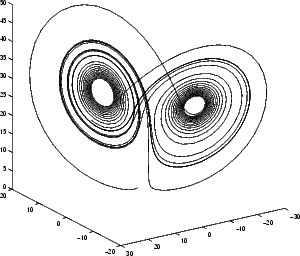
</p><!--l. 77--><p class="noindent">Esimerkkin&#x00E4; on aksonometrinen kuva <span 
class="aeti-10"> Lorenzin systeemin </span>
</p>
<div class="math-display"><!--l. 78--><math 
 xmlns="http://www.w3.org/1998/Math/MathML" display="block" ><mrow 
>
<mfenced separators="" 
open="{"  close="" ><mrow><mtable  align="axis"  
equalrows="false" equalcolumns="false" class="array"><mtr><mtd 
class="array"  columnalign="left"><msubsup><mrow 
><mi 
>y</mi></mrow><mrow 
><mn>1</mn></mrow><mrow 
><mi 
>&#x2032;</mi></mrow></msubsup 
></mtd><mtd 
class="array"  columnalign="left"> <mo 
class="MathClass-rel">=</mo> <mn>1</mn><mn>0</mn><mrow><mo 
class="MathClass-open">(</mo><mrow><msub><mrow 
><mi 
>y</mi></mrow><mrow 
><mn>2</mn></mrow></msub 
> <mo 
class="MathClass-bin">&#x2212;</mo> <msub><mrow 
><mi 
>y</mi></mrow><mrow 
><mn>1</mn></mrow></msub 
></mrow><mo 
class="MathClass-close">)</mo></mrow><mo 
class="MathClass-punc">,</mo>      </mtd>
</mtr><mtr><mtd 
class="array"  columnalign="left"><msubsup><mrow 
><mi 
>y</mi></mrow><mrow 
><mn>2</mn></mrow><mrow 
><mi 
>&#x2032;</mi></mrow></msubsup 
></mtd><mtd 
class="array"  columnalign="left"> <mo 
class="MathClass-rel">=</mo> <mn>2</mn><mn>8</mn><msub><mrow 
><mi 
>y</mi></mrow><mrow 
><mn>1</mn></mrow></msub 
> <mo 
class="MathClass-bin">&#x2212;</mo> <msub><mrow 
><mi 
>y</mi></mrow><mrow 
><mn>2</mn></mrow></msub 
> <mo 
class="MathClass-bin">&#x2212;</mo> <msub><mrow 
><mi 
>y</mi></mrow><mrow 
><mn>1</mn></mrow></msub 
><msub><mrow 
><mi 
>y</mi></mrow><mrow 
><mn>3</mn></mrow></msub 
><mo 
class="MathClass-punc">,</mo></mtd>
</mtr><mtr><mtd 
class="array"  columnalign="left"><msubsup><mrow 
><mi 
>y</mi></mrow><mrow 
><mn>3</mn></mrow><mrow 
><mi 
>&#x2032;</mi></mrow></msubsup 
></mtd><mtd 
class="array"  columnalign="left"> <mo 
class="MathClass-rel">=</mo> <msub><mrow 
><mi 
>y</mi></mrow><mrow 
><mn>1</mn></mrow></msub 
><msub><mrow 
><mi 
>y</mi></mrow><mrow 
><mn>2</mn></mrow></msub 
> <mo 
class="MathClass-bin">&#x2212;</mo><mfrac><mrow> <mn>8</mn></mrow> 
<mrow><mn>3</mn></mrow></mfrac><msub><mrow 
><mi 
>y</mi></mrow><mrow 
><mn>3</mn></mrow></msub 
>           </mtd></mtr>
<!--ll--></mtable>                                                                                 </mrow></mfenced>
</mrow></math></div>
<!--l. 84--><p class="nopar">er&#x00E4;&#x00E4;st&#x00E4; ratkaisuk&#x00E4;yr&#x00E4;st&#x00E4; kolmiulotteisessa faasiavaruudessa:
</p>
<div class="center" 
>
<!--l. 86--><p class="noindent">
                                                                                 
                                                                                 
<img 
src="images/nkkfs30x.gif" alt="PIC" class="graphics"   /><!--tex4ht:graphics  
name="nkkfs30x.gif" src="nkkfs3.eps"  
--></p></div>
<!--l. 90--><p class="noindent"><span 
class="ecbx-1000">Linkkej</span><span 
class="ecbx-1000">&#x00E4;</span>
</p><!--l. 90--><p class="noindent"><a 
href="../xml/ryhyle.xml" >differentiaaliyht&#x00E4;l&#x00F6;ryhm&#x00E4;</a>


<br class="newline" /> <a 
href="../xml/peraut.xml" >autonominen yht&#x00E4;l&#x00F6; ja yht&#x00E4;l&#x00F6;ryhm&#x00E4;</a>
<br class="newline" /> <a 
href="../xml/yhmnor.xml" >normaaliryhm&#x00E4;</a>
<br class="newline" /> <a 
href="../xml/nkkfas.xml" >faasitaso</a>
<br class="newline" />
<span 
class="ecti-1000">Simo K. Kivel</span><span 
class="ecti-1000">&#x00E4;</span>    27.03.2001
</p>
 
</body> 
</html>
