<?xml version="1.0" encoding="iso-8859-1" ?>
<?xml-stylesheet type="text/xsl" href="xsl/mathml.xsl"?>
<?xml-stylesheet type="text/css" href="../navi/css/ratk.css"?>
<?xml-stylesheet type="text/css" href="css/numeul.css"?>
<html  
xmlns="http://www.w3.org/1999/xhtml"  
><head>
<title>XML</title> 
<meta http-equiv="Content-Type" content="text/html; charset=iso-8859-1" /> 
<meta name="generator" content="TeX4ht (http://www.cse.ohio-state.edu/~gurari/TeX4ht/mn.html)" /> 
<meta name="originator" content="TeX4ht (http://www.cse.ohio-state.edu/~gurari/TeX4ht/mn.html)" /> 
<!-- xhtml,mozilla --> 
<meta name="src" content="numeul.tex" /> 
<meta name="date" content="2005-04-07 09:23:00" /> 
<link rel="stylesheet" type="text/css" href="../navi/css/ratk.css" />
<link rel="stylesheet" type="text/css" href="css/numeul.css" /> 
</head><body 
>
<h3 class="likesectionHead"><a 
 id="x1-1000"></a>Eulerin menetelm&#x00E4;</h3>
<!--l. 28--><p class="noindent">Alkuarvoprobleeman
</p>
<div class="math-display"><!--l. 29--><math 
 xmlns="http://www.w3.org/1998/Math/MathML" display="block" ><mrow 
>
                               <msup><mrow 
><mi 
>y</mi></mrow><mrow 
><mi 
>&#x2032;</mi></mrow></msup 
> <mo 
class="MathClass-rel">=</mo> <mi 
>f</mi><mrow><mo 
class="MathClass-open">(</mo><mrow><mi 
>x</mi><mo 
class="MathClass-punc">,</mo><mi 
>y</mi></mrow><mo 
class="MathClass-close">)</mo></mrow><mo 
class="MathClass-punc">,</mo><mspace width="1em" class="quad"/><mi 
>y</mi><mrow><mo 
class="MathClass-open">(</mo><mrow><msub><mrow 
><mi 
>x</mi></mrow><mrow 
>
<mn>0</mn></mrow></msub 
></mrow><mo 
class="MathClass-close">)</mo></mrow> <mo 
class="MathClass-rel">=</mo> <msub><mrow 
><mi 
>y</mi></mrow><mrow 
><mn>0</mn></mrow></msub 
>
</mrow></math></div>
<!--l. 31--><p class="nopar"> ratkaisun ensimm&#x00E4;isen asteen Taylorin kehitelm&#x00E4; pisteess&#x00E4;
<!--l. 32--><math 
 xmlns="http://www.w3.org/1998/Math/MathML" display="inline" ><msub><mrow 
><mi 
>x</mi></mrow><mrow 
><mi 
>k</mi></mrow></msub 
></math>&#x0020;
on
</p><!--tex4ht:inline--><!--l. 36--><math 
 xmlns="http://www.w3.org/1998/Math/MathML" display="block" ><mtable 
columnalign="left" class="align-star">
                       <mtr><mtd 
columnalign="right" class="align-odd"><mi 
>y</mi><mrow><mo 
class="MathClass-open">(</mo><mrow><msub><mrow 
><mi 
>x</mi></mrow><mrow 
><mi 
>k</mi></mrow></msub 
> <mo 
class="MathClass-bin">+</mo> <mi 
>h</mi></mrow><mo 
class="MathClass-close">)</mo></mrow></mtd>                       <mtd 
class="align-even"> <mo 
class="MathClass-rel">=</mo> <mi 
>y</mi><mrow><mo 
class="MathClass-open">(</mo><mrow><msub><mrow 
><mi 
>x</mi></mrow><mrow 
><mi 
>k</mi></mrow></msub 
></mrow><mo 
class="MathClass-close">)</mo></mrow> <mo 
class="MathClass-bin">+</mo> <mi 
>h</mi><msup><mrow 
><mi 
>y</mi></mrow><mrow 
><mi 
>&#x2032;</mi></mrow></msup 
><mrow><mo 
class="MathClass-open">(</mo><mrow><msub><mrow 
><mi 
>x</mi></mrow><mrow 
>
<mi 
>k</mi></mrow></msub 
></mrow><mo 
class="MathClass-close">)</mo></mrow> <mo 
class="MathClass-bin">+</mo> <mi 
>O</mi><mrow><mo 
class="MathClass-open">(</mo><mrow><msup><mrow 
><mi 
>h</mi></mrow><mrow 
><mn>2</mn></mrow></msup 
></mrow><mo 
class="MathClass-close">)</mo></mrow><mspace width="2em"/></mtd>                            <mtd 
columnalign="right" class="align-label"></mtd>                       <mtd 
class="align-label">
                       <mspace width="2em"/></mtd></mtr><mtr><mtd 
columnalign="right" class="align-odd"></mtd>                               <mtd 
class="align-even"> <mo 
class="MathClass-rel">=</mo> <mi 
>y</mi><mrow><mo 
class="MathClass-open">(</mo><mrow><msub><mrow 
><mi 
>x</mi></mrow><mrow 
><mi 
>k</mi></mrow></msub 
></mrow><mo 
class="MathClass-close">)</mo></mrow> <mo 
class="MathClass-bin">+</mo> <mi 
>h</mi><mi 
>f</mi><mrow><mo 
class="MathClass-open">(</mo><mrow><msub><mrow 
><mi 
>x</mi></mrow><mrow 
><mi 
>k</mi></mrow></msub 
><mo 
class="MathClass-punc">,</mo><mi 
>y</mi><mrow><mo 
class="MathClass-open">(</mo><mrow><msub><mrow 
><mi 
>x</mi></mrow><mrow 
><mi 
>k</mi></mrow></msub 
></mrow><mo 
class="MathClass-close">)</mo></mrow></mrow><mo 
class="MathClass-close">)</mo></mrow> <mo 
class="MathClass-bin">+</mo> <mi 
>O</mi><mrow><mo 
class="MathClass-open">(</mo><mrow><msup><mrow 
><mi 
>h</mi></mrow><mrow 
><mn>2</mn></mrow></msup 
></mrow><mo 
class="MathClass-close">)</mo></mrow><mo 
class="MathClass-punc">.</mo><mspace width="2em"/></mtd>                       <mtd 
columnalign="right" class="align-label"></mtd>                       <mtd 
class="align-label">
<mspace width="2em"/></mtd></mtr></mtable></math>&#x0020;
<!--l. 37--><p class="noindent">Kun t&#x00E4;st&#x00E4; j&#x00E4;tet&#x00E4;&#x00E4;n j&#x00E4;&#x00E4;nn&#x00F6;stermi pois ja funktion
<!--l. 37--><math 
 xmlns="http://www.w3.org/1998/Math/MathML" display="inline" ><mi 
>y</mi></math> arvot
korvataan niiden approksimaatioilla, saadaan <span 
class="aeti-10"> Eulerin menetelm</span><span 
class="aeti-10">&#x00E4;</span><span 
class="aeti-10">n </span>iteraatiokaava:
</p>
                                                                                 
                                                                                 
<div class="math-display"><!--l. 40--><math 
 xmlns="http://www.w3.org/1998/Math/MathML" display="block" ><mrow 
>
                               <msub><mrow 
><mi 
>y</mi></mrow><mrow 
><mi 
>k</mi><mo 
class="MathClass-bin">+</mo><mn>1</mn></mrow></msub 
> <mo 
class="MathClass-rel">=</mo> <msub><mrow 
><mi 
>y</mi></mrow><mrow 
><mi 
>k</mi></mrow></msub 
> <mo 
class="MathClass-bin">+</mo> <mi 
>h</mi><mi 
>f</mi><mrow><mo 
class="MathClass-open">(</mo><mrow><msub><mrow 
><mi 
>x</mi></mrow><mrow 
><mi 
>k</mi></mrow></msub 
><mo 
class="MathClass-punc">,</mo><msub><mrow 
><mi 
>y</mi></mrow><mrow 
><mi 
>k</mi></mrow></msub 
></mrow><mo 
class="MathClass-close">)</mo></mrow><mo 
class="MathClass-punc">.</mo>
</mrow></math></div>
<!--l. 42--><p class="nopar">
</p><!--l. 44--><p class="noindent">Numeerinen ratkaiseminen tapahtuu valitsemalla sopiva askelpituus
<!--l. 44--><math 
 xmlns="http://www.w3.org/1998/Math/MathML" display="inline" ><mi 
>h</mi></math>&#x0020;
ja soveltamalla iteraatiokaavaa ensimm&#x00E4;isen kerran indeksill&#x00E4;
<!--l. 46--><math 
 xmlns="http://www.w3.org/1998/Math/MathML" display="inline" ><mi 
>k</mi> <mo 
class="MathClass-rel">=</mo> <mn>0</mn></math>,
jolloin oikealle puolelle sijoitetaan alkuehdossa olevat arvot ja saadaan lasketuksi
<!--l. 47--><math 
 xmlns="http://www.w3.org/1998/Math/MathML" display="inline" ><msub><mrow 
><mi 
>y</mi></mrow><mrow 
><mn>1</mn> </mrow> </msub 
> </math>.
T&#x00E4;m&#x00E4; on approksimaatio ratkaisufunktion arvolle pisteess&#x00E4;
<!--l. 48--><math 
 xmlns="http://www.w3.org/1998/Math/MathML" display="inline" ><msub><mrow 
><mi 
>x</mi></mrow><mrow 
><mn>1</mn> </mrow> </msub 
> <mo 
class="MathClass-rel">=</mo> <msub><mrow 
><mi 
>x</mi></mrow><mrow 
><mn>0</mn> </mrow> </msub 
> <mo 
class="MathClass-bin">+</mo> <mi 
>h</mi></math>. T&#x00E4;m&#x00E4;n j&#x00E4;lkeen
askel toistetaan arvolla <!--l. 49--><math 
 xmlns="http://www.w3.org/1998/Math/MathML" display="inline" ><mi 
>k</mi> <mo 
class="MathClass-rel">=</mo> <mn>1</mn></math>&#x0020;
yleens&#x00E4; samaa askelpituutta <!--l. 49--><math 
 xmlns="http://www.w3.org/1998/Math/MathML" display="inline" ><mi 
>h</mi></math>&#x0020;
k&#x00E4;ytt&#x00E4;en, ja saadaan <!--l. 50--><math 
 xmlns="http://www.w3.org/1998/Math/MathML" display="inline" ><msub><mrow 
><mi 
>y</mi></mrow><mrow 
><mn>2</mn></mrow></msub 
></math>,
joka approksimoi ratkaisufunktion arvoa pisteess&#x00E4;
<!--l. 51--><math 
 xmlns="http://www.w3.org/1998/Math/MathML" display="inline" ><msub><mrow 
><mi 
>x</mi></mrow><mrow 
><mn>2</mn> </mrow> </msub 
> <mo 
class="MathClass-rel">=</mo> <msub><mrow 
><mi 
>x</mi></mrow><mrow 
><mn>1</mn> </mrow> </msub 
> <mo 
class="MathClass-bin">+</mo> <mi 
>h</mi></math>,
jne.
</p><!--l. 53--><p class="noindent">Koska <!--l. 53--><math 
 xmlns="http://www.w3.org/1998/Math/MathML" display="inline" ><mi 
>f</mi><mrow><mo 
class="MathClass-open">(</mo><mrow><msub><mrow 
><mi 
>x</mi></mrow><mrow 
><mi 
>k</mi> </mrow> </msub 
> <mo 
class="MathClass-punc">,</mo> <msub><mrow 
><mi 
>y</mi></mrow><mrow 
><mi 
>k</mi> </mrow> </msub 
> </mrow><mo 
class="MathClass-close">)</mo></mrow> <mo 
class="MathClass-rel">=</mo> <msup><mrow 
><mi 
>y</mi></mrow><mrow 
><mi 
>&#x2032;</mi></mrow></msup 
><mrow><mo 
class="MathClass-open">(</mo><mrow><msub><mrow 
><mi 
>x</mi></mrow><mrow 
><mi 
>k</mi></mrow></msub 
></mrow><mo 
class="MathClass-close">)</mo></mrow></math> on ratkaisufunktion
kulmakerroin pisteess&#x00E4; <!--l. 54--><math 
 xmlns="http://www.w3.org/1998/Math/MathML" display="inline" ><msub><mrow 
><mi 
>x</mi></mrow><mrow 
><mi 
>k</mi></mrow></msub 
></math>,
Eulerin menetelm&#x00E4;ss&#x00E4; edet&#x00E4;&#x00E4;n pisteest&#x00E4;
<!--l. 54--><math 
 xmlns="http://www.w3.org/1998/Math/MathML" display="inline" ><mrow><mo 
class="MathClass-open">(</mo><mrow><msub><mrow 
><mi 
>x</mi></mrow><mrow 
><mi 
>k</mi> </mrow> </msub 
> <mo 
class="MathClass-punc">,</mo> <msub><mrow 
><mi 
>y</mi></mrow><mrow 
><mi 
>k</mi> </mrow> </msub 
> </mrow><mo 
class="MathClass-close">)</mo></mrow></math>&#x0020;
ratkaisuk&#x00E4;yr&#x00E4;n tangentin suuntaan. T&#x00E4;st&#x00E4; aiheutuu luonnollisesti
virhe, joka yleens&#x00E4; on sit&#x00E4; suurempi, mit&#x00E4; pitemp&#x00E4;&#x00E4; askelpituutta
<!--l. 56--><math 
 xmlns="http://www.w3.org/1998/Math/MathML" display="inline" ><mi 
>h</mi></math>&#x0020;
k&#x00E4;ytet&#x00E4;&#x00E4;n. Differentiaaliyht&#x00E4;l&#x00F6;n luonteesta riippuu, kumuloituvatko virheet
useammassa askelessa vai eiv&#x00E4;t.
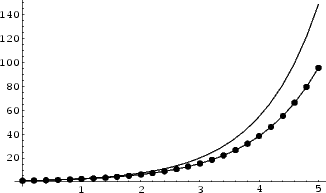
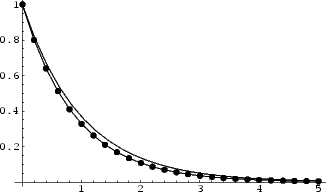
</p><!--l. 60--><p class="noindent">Oheiset kuvat esitt&#x00E4;v&#x00E4;t alkuarvoprobleemojen
<!--l. 60--><math 
 xmlns="http://www.w3.org/1998/Math/MathML" display="inline" ><msup><mrow 
><mi 
>y</mi></mrow><mrow 
><mi 
>&#x2032;</mi> </mrow> </msup 
> <mo 
class="MathClass-rel">=</mo> <mi 
>y</mi><mo 
class="MathClass-punc">,</mo> <mspace class="nbsp" /> <mi 
>y</mi><mrow><mo 
class="MathClass-open">(</mo><mrow><mn>0</mn></mrow><mo 
class="MathClass-close">)</mo></mrow> <mo 
class="MathClass-rel">=</mo> <mn>1</mn></math> ja
<!--l. 61--><math 
 xmlns="http://www.w3.org/1998/Math/MathML" display="inline" ><msup><mrow 
><mi 
>y</mi></mrow><mrow 
><mi 
>&#x2032;</mi> </mrow> </msup 
> <mo 
class="MathClass-rel">=</mo> <mo 
class="MathClass-bin">&#x2212;</mo><mi 
>y</mi><mo 
class="MathClass-punc">,</mo> <mspace class="nbsp" /> <mi 
>y</mi><mrow><mo 
class="MathClass-open">(</mo><mrow><mn>0</mn></mrow><mo 
class="MathClass-close">)</mo></mrow> <mo 
class="MathClass-rel">=</mo> <mn>1</mn></math> tarkkoja
ratkaisuja ja niiden Eulerin menetelm&#x00E4;n mukaisia approksimaatioita suhteellisen suurta askelpituutta
<!--l. 63--><math 
 xmlns="http://www.w3.org/1998/Math/MathML" display="inline" ><mi 
>h</mi> <mo 
class="MathClass-rel">=</mo> <mn>0</mn><mo 
class="MathClass-punc">.</mo><mn>2</mn></math>&#x0020;
k&#x00E4;ytett&#x00E4;ess&#x00E4;. Edellisess&#x00E4; tapauksessa virheet kumuloituvat, j&#x00E4;lkimm&#x00E4;isess&#x00E4;
alun kumuloitumisen j&#x00E4;lkeen virhe katoaa. </p>
<div class="center" 
>
<!--l. 65--><p class="noindent">
                                                                                 
                                                                                 
<img 
src="images/numeul0x.gif" alt="PIC" class="graphics"   /><!--tex4ht:graphics  
name="numeul0x.gif" src="numeul1.eps"  
-->
<img 
src="images/numeul1x.gif" alt="PIC" class="graphics"   /><!--tex4ht:graphics  
name="numeul1x.gif" src="numeul2.eps"  
--></p></div>
<!--l. 70--><p class="noindent">Eulerin menetelm&#x00E4; voidaan johtaa my&#x00F6;s integroimalla differentiaaliyht&#x00E4;l&#x00F6; v&#x00E4;lin
<!--l. 71--><math 
 xmlns="http://www.w3.org/1998/Math/MathML" display="inline" ><mrow><mo 
class="MathClass-open">[</mo><mrow><msub><mrow 
><mi 
>x</mi></mrow><mrow 
><mi 
>k</mi> </mrow> </msub 
> <mo 
class="MathClass-punc">,</mo> <msub><mrow 
><mi 
>x</mi></mrow><mrow 
><mi 
>k</mi><mo 
class="MathClass-bin">+</mo><mn>1</mn> </mrow> </msub 
> </mrow><mo 
class="MathClass-close">]</mo></mrow></math>&#x0020;
yli:
</p>
<div class="math-display"><!--l. 72--><math 
 xmlns="http://www.w3.org/1998/Math/MathML" display="block" ><mrow 
>
                        <mi 
>y</mi><mrow><mo 
class="MathClass-open">(</mo><mrow><msub><mrow 
><mi 
>x</mi></mrow><mrow 
><mi 
>k</mi><mo 
class="MathClass-bin">+</mo><mn>1</mn></mrow></msub 
></mrow><mo 
class="MathClass-close">)</mo></mrow> <mo 
class="MathClass-bin">&#x2212;</mo> <mi 
>y</mi><mrow><mo 
class="MathClass-open">(</mo><mrow><msub><mrow 
><mi 
>x</mi></mrow><mrow 
><mi 
>k</mi></mrow></msub 
></mrow><mo 
class="MathClass-close">)</mo></mrow> <mo 
class="MathClass-rel">=</mo><msubsup><mrow 
><mo mathsize="big" 
> &#x222B;</mo>
  <!--nolimits--></mrow><mrow 
><msub><mrow 
><mi 
>x</mi></mrow><mrow 
><mi 
>k</mi></mrow></msub 
></mrow><mrow 
><msub><mrow 
><mi 
>x</mi></mrow><mrow 
><mi 
>k</mi><mo 
class="MathClass-bin">+</mo><mn>1</mn></mrow></msub 
>
            </mrow></msubsup 
><mi 
>f</mi><mrow><mo 
class="MathClass-open">(</mo><mrow><mi 
>x</mi><mo 
class="MathClass-punc">,</mo><mi 
>y</mi><mrow><mo 
class="MathClass-open">(</mo><mrow><mi 
>x</mi></mrow><mo 
class="MathClass-close">)</mo></mrow></mrow><mo 
class="MathClass-close">)</mo></mrow><mspace width="0em" class="thinspace"/><mi 
>d</mi><mi 
>x</mi><mo 
class="MathClass-punc">.</mo>
</mrow></math></div>
<!--l. 74--><p class="nopar">Kun integraalin approksimaatioksi otetaan v&#x00E4;lin pituuden
<!--l. 75--><math 
 xmlns="http://www.w3.org/1998/Math/MathML" display="inline" ><mi 
>h</mi></math> ja v&#x00E4;lin alkupisteess&#x00E4;
lasketun funktion arvon <!--l. 76--><math 
 xmlns="http://www.w3.org/1998/Math/MathML" display="inline" ><mi 
>f</mi><mrow><mo 
class="MathClass-open">(</mo><mrow><msub><mrow 
><mi 
>x</mi></mrow><mrow 
><mi 
>k</mi></mrow></msub 
><mo 
class="MathClass-punc">,</mo><mi 
>y</mi><mrow><mo 
class="MathClass-open">(</mo><mrow><msub><mrow 
><mi 
>x</mi></mrow><mrow 
><mi 
>k</mi></mrow></msub 
></mrow><mo 
class="MathClass-close">)</mo></mrow></mrow><mo 
class="MathClass-close">)</mo></mrow></math>&#x0020;
tulo, p&#x00E4;&#x00E4;dyt&#x00E4;&#x00E4;n samaan iteraatiokaavaan kuin edell&#x00E4;.
</p><!--l. 79--><p class="noindent"><span 
class="ecbx-1000">Linkkej</span><span 
class="ecbx-1000">&#x00E4;</span>
</p><!--l. 79--><p class="noindent"><a 
href="../xml/numper.xml" >numeerisen ratkaisemisen perusidea</a>
<br class="newline" /> <a 
href="../xml_mma/nummen.xml" >alkuarvoprobleeman numeerinen ratkaiseminen, esimerkki (mma-versio)</a>
<br class="newline" /> <a 
href="../xml_mma/numryh.xml" >Airyn yht&#x00E4;l&#x00F6;n numeerinen ratkaiseminen, esimerkki (mma-versio)</a>
<br class="newline" /> <a 
href="../xml_mpl/nummen.xml" >alkuarvoprobleeman numeerinen ratkaiseminen, esimerkki (mpl-versio)</a>
<br class="newline" /> <a 
href="../xml_mpl/numryh.xml" >Airyn yht&#x00E4;l&#x00F6;n numeerinen ratkaiseminen, esimerkki (mpl-versio)</a>
<br class="newline" />
<span 
class="ecti-1000">Simo K. Kivel</span><span 
class="ecti-1000">&#x00E4;</span>    10.4.2001
</p>
 
</body> 
</html>
